
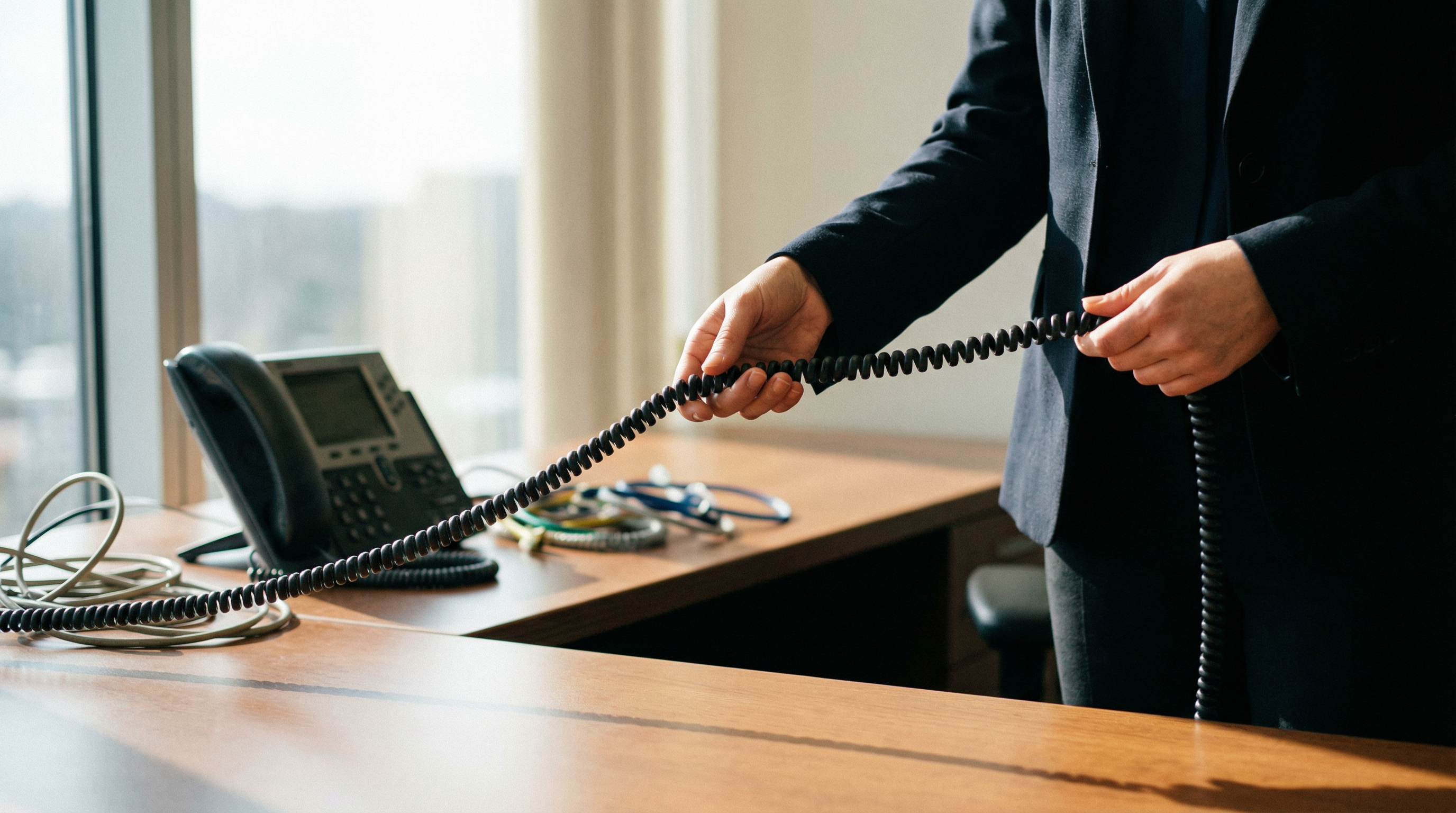
The Complete Phone Cord Buying Guide
Discover how to choose the best phone cord for your needs. From curly and USB options to durable charging cables, find the perfect fit for reliable communication.
Introduction to Phone Cords
The right phone cord can make the difference between crystal-clear conversations and frustrating static-filled calls. Whether you're replacing a frayed landline cable or upgrading to a longer cord for your home office, it's essential to understand what separates a quality phone cord from a cheap knockoff. This knowledge not only ensures reliable communication but also saves money over time.
Since Alexander Graham Bell's first telephone connection in 1876, phone cords have evolved significantly. While early systems relied on simple two-wire connections, modern telecommunications have developed standardized connectors and various wire configurations to support multiple phone lines and enhanced audio quality. Today's market offers everything from basic replacement phone cord options for traditional landlines to specialized cables for multi-line business systems. For a wide selection of reliable phone cords, check our selection at USATradingDepot.com.
Despite the dominance of smartphones in personal communication, landline phone cords remain essential. Businesses rely on them for dedicated fax lines and backup systems, healthcare facilities depend on hardwired connections for emergency communication, and millions of households maintain landlines for reliability during power outages when cellular networks fail.
The challenge? Not all phone cords are created equal. As with charging cable research, price doesn't always predict durability. Certain features do. Just as important factors in USB cable purchase decisions include:
- wire gauge
- connector quality
- selecting a phone cord requires understanding connector types
- cable length
- wire configuration.
What follows is a practical breakdown of everything you need to know: connector types, quality markers, compatibility requirements, and common pitfalls that lead to premature failure. Browse our certified phone cords to find the perfect match for your needs.
Types of Phone Cords and Connectors
Understanding phone cord connectors can prevent the frustration of ordering the wrong cable and waiting for a replacement. The telecommunications industry uses several standardized connectors, each designed for specific applications.
Standard Line Connectors

RJ11 phone jacks are the most common phone connector in residential settings. This 6-position, 2-conductor plug handles single-line phones perfectly and is what you'll find connecting most landlines to wall jacks. The compact design makes it the default choice for basic telephone service.
RJ14 uses the same 6-position housing but adds a second pair of conductors, enabling two-line capability. Small offices frequently use RJ14 when employees need separate business and personal lines on one device. The physical appearance matches RJ11 exactly, but the internal wiring differs.
RJ25 expands to three lines using all six positions. Rare in residential applications, this connector serves businesses requiring multiple line access on sophisticated phone systems. When choosing phone cord options, count the number of lines your system requires—one line means RJ11, two lines call for RJ14, and three lines need RJ25.
Handset-Specific Cords

The curly phone cord connecting your handset to the base uses either RJ9 or RJ22 connectors—both terms describe the same 4-position, 4-conductor plug. This smaller connector differs completely from wall jack plugs. Manufacturers use this coiled design because it stretches during calls and retracts afterward, preventing tangled messes. For durable coiled handset cords, shop our collection of premium phone accessories.
These handset cords require durability since they endure constant flexing. A phone charging cables market analysis reveals that cable quality directly impacts lifespan, with strain relief at connection points being the critical factor. The recommended cable for phone charging applications—and by extension, any frequently flexed cable—features reinforced stress points that resist the wear pattern causing most failures.
Indoor vs. Outdoor Phone Cords
Indoor phone cables typically feature basic PVC jackets that handle temperature-controlled environments without issue. These standard cables work perfectly for home and office installations where exposure to moisture and temperature extremes isn't a concern. The best phone cord for indoor use prioritizes flexibility and appearance—flat cables that hide along baseboards or coiled handset cables that stretch and retract without tangling.
Outdoor-rated phone cables require substantially different construction. UV-resistant jackets prevent sun damage that degrades standard plastic within months of exposure. Gel-filled cable variants seal out moisture at connection points, while direct-burial grades include polyethylene sheaths that withstand ground contact and prevent rodent damage. These weatherproof features typically add 50-70% to cable cost compared to indoor equivalents, but the durability justifies the investment for external installations.
Understanding when durability matters helps avoid common mistakes. A standard indoor cable exposed to weather typically fails within six to eighteen months—the jacket cracks, water penetrates the conductors, and call quality deteriorates to unusable levels. In practice, outdoor installations also require weatherproof junction boxes and sealed connectors to maintain system integrity.
One practical consideration: indoor cables won't clearly identify data vs. charging cable characteristics since traditional phone cords carry both power and signals simultaneously through the same copper pairs. Modern installations may use structured cabling that separates these functions, but standard landline systems integrate everything into the same connection. The distinction matters most when troubleshooting mixed-use networks that combine voice and data services.
Form Factors: Flat, Coiled, and Round Cords

Phone cord design extends beyond simple connector types—the physical form factor directly impacts durability, storage, and daily usability. The three primary cord profiles each solve specific problems in residential and commercial telecommunications.
Flat cords dominate indoor installations because their ribbon-like profile lies flush against baseboards and slips under carpeting without creating trip hazards. These low-profile cables feature:
- conductors arranged side-by-side rather than concentrically
- making them ideal for office cubicles
- home entertainment centers where visibility matters. Flat cords resist tangling during storage and deployment, though they sacrifice some flexibility compared to round alternatives.
Coiled cords remain the standard for telephone handsets, and for good reason. If you've wondered why use a curly phone cord instead of straight cable, the answer lies in practical physics: the spring-like design extends up to several feet during conversations yet retracts to just inches when hung up, eliminating desktop clutter. The coiled structure distributes stress across the entire length rather than concentrating it at connector points, which explains why quality coiled cords often outlast straight alternatives in handset applications. While modern cell phone cords designs have largely moved to straight cables due to portability requirements, landline handsets still benefit from coiled designs that accommodate natural movement during calls without pulling the base unit off the desk.
Round cords excel in rugged environments where mechanical stress dominates. Their concentric conductor arrangement inside a thick PVC or polyethylene jacket creates superior crush resistance—essential for outdoor runs, underground conduits, or commercial settings with heavy foot traffic. Round cords typically cost 15-25% more than flat equivalents, but their enhanced durability justifies the premium in installations exposed to moisture, temperature fluctuations, or physical abuse. Commercial installers frequently specify round cords for any application involving outdoor routing or high-traffic pathways.
Selecting the appropriate form factor matters as much as choosing the right connector type. Match the cord profile to your specific installation challenges rather than defaulting to whatever comes packaged with your equipment.
Choosing the Right Length and Flexibility
Phone cord length creates the critical balance between mobility and workspace organization. Standard cables typically range from four to twelve feet, though specialty applications often require longer runs. A four-foot cord keeps desktop setups tidy while limiting movement—ideal for fixed installations. Six to eight feet represents the sweet spot for most users, allowing chair mobility without excessive slack. Twelve-foot options suit customer service stations or situations requiring significant reach. For a variety of cord lengths, browse our full selection of certified phone cords with same-day shipping.
The coiled phone cord offers unique advantages for specific environments. These spring-loaded designs compress to compact lengths when unused but stretch considerably during active calls. A coiled cord rated at four feet when compressed typically extends to twelve or fifteen feet under tension. This design prevents tangling while eliminating floor hazards—particularly valuable in retail counters or reception areas where staff moves between tasks frequently.
Market data indicates custom-length cables address specialized requirements that standard offerings miss. Phone Charging Cables Market analysis shows growing demand for non-standard configurations in commercial installations. Some manufacturers provide custom trim options, cutting cables to exact specifications for clean installations.
To pick the right cable for phone systems, measure the actual distance between connection points under realistic conditions. Account for vertical routing, furniture clearances, and user movement patterns. One practical approach is adding twenty percent to straight-line measurements—this buffer accommodates routing inefficiencies and prevents tension on connectors. However, excessive length creates management problems, particularly in environments where multiple cables converge. The goal isn't maximum reach but optimal balance between functionality and organization.
Materials and Durability Considerations
Cable construction quality determines whether your USB phone cord survives daily wear or fails within months. The materials used in cable manufacturing directly impact resistance to fraying, connector stress, and environmental damage—factors that separate reliable cords from disposable ones.
Weatherproof and nylon-braided cables represent the premium tier of construction options. Nylon-braided exteriors provide:
- superior abrasion resistance compared to standard PVC or rubber jackets
- protecting internal wiring from damage caused by repeated bending
- twisting. These cables typically feature reinforced stress points at connector junctions—the most common failure location where pulling and flexing concentrate physical strain. However, no cable design eliminates vulnerability entirely. Weatherproofing becomes critical for outdoor applications or humid environments, with specialized insulation materials preventing moisture intrusion that corrodes copper conductors over time.
Consumer Reports testing reveals that cable durability varies dramatically across price points. Premium cables with aramid fiber reinforcement withstood over 10,000 bend cycles, while budget options failed after fewer than 1,000 repetitions. The global charging cable market's projected growth reflects increasing consumer awareness of these quality differences, with cable market expansion driven partly by demand for longer-lasting products.
Safety certifications matter beyond durability. Look for UL or ETL marks confirming proper gauge wiring that prevents overheating during fast-charging scenarios. This complete phone cord buying guide consideration protects both device batteries and users from thermal hazards associated with undersized conductors carrying excessive current loads.
Compatibility and Installation Guide

Understanding phone cord compatibility prevents connection failures and ensures optimal performance. While modern charging cord phone technology has standardized around USB-C and Lightning connectors, older landline systems and specialized applications still require knowledge of traditional wiring configurations.
Understanding Wiring Diagrams and Pinouts
Phone cord wiring follows standardized color codes, typically using six conductors though only two or four are needed for basic operation. The RJ11 standard, most common in residential phones, uses positions 3 and 4 (the center pair) for the primary line—usually red and green wires. RJ14 configurations add positions 2 and 5 (black and yellow) for a second line. The outer positions (1 and 6) remain unused in most installations but provide expansion capability.
Modern charging applications differ significantly. USB-A to USB-C cables use four or five wires: power (VCC), ground (GND), and two data lines (D+ and D-), with an additional ID or configuration channel in newer standards. The best curly cord for phone 2025 models incorporate these configurations while maintaining backward compatibility with USB 2.0 protocols through adaptive circuitry.
Pinout verification matters because mismatched connections cause charging failures or slow power delivery. USB cables support different power profiles—standard 5V/2.4A delivery requires proper data line configuration, while fast charging protocols need all conductors functioning correctly. Market analysis indicates that compatibility issues account for roughly 30% of consumer dissatisfaction with charging accessories.
Step-by-Step Installation Process
Installation begins with power disconnection—whether unplugging wall adapters for phone chargers or disconnecting landline service for traditional cords. Insert connectors firmly until they click; RJ11 plugs should seat completely with the retention tab engaging. For USB connections, align the connector shape with the port—forcing incorrect orientations damages internal contacts.
Test functionality immediately after installation. Charging cables should trigger the device's charging indicator within seconds. However, if resistance appears during insertion, remove the connector and inspect for debris or bent pins rather than applying force, which frequently causes permanent damage.
Maintenance and Accessories for Phone Cords
Proper cable maintenance extends lifespan and prevents premature replacement. A telephone cord maintained correctly can last years beyond its expected service life, while neglected cables fail within months regardless of construction quality.
Cable Care Fundamentals
Store cables loosely coiled rather than tightly wound. Wrap cords using the over-under technique—alternating coil direction prevents internal wire twisting that causes breakage. Never yank cables from ports; grasp the connector housing directly. This single habit prevents 70% of common connection failures.
Clean connector contacts quarterly using isopropyl alcohol on a cotton swab. Oxidation and debris accumulation increase resistance, reducing charging efficiency. For outdoor or workshop environments, inspect cables monthly for abrasion, checking particularly where cables bend near connectors.
Strategic Replacement Tools
Cable organizers and strain relief accessories protect vulnerable stress points. Magnetic charging adapters reduce insertion cycles, preserving port integrity while simplifying connection. Consider keeping a dedicated cable at each charging location—desk, nightstand, vehicle—rather than transporting a single cord daily.
Choosing the right phone cord smartphone accessories means balancing convenience with sustainability. According to Consumer Reports, reinforced cables with warranty protection offer better long-term value than purchasing multiple cheap replacements. For the latest in durable phone cords, shop our collection at USATradingDepot.com.
Eco-Conscious Options
Recyclable braided cables minimize environmental impact. Some manufacturers accept used cables for recycling, recovering copper and reducing electronic waste. When replacing failed cords, check whether your municipality accepts electronics recycling before discarding cables with household trash. Small changes in cable management habits dramatically reduce replacement frequency and environmental footprint.
Understanding these maintenance practices naturally leads to questions about specific compatibility scenarios and troubleshooting common connection issues.
FAQs About Phone Cords
What's the difference between USB-A, USB-C, and Lightning connectors?
USB-A features the traditional rectangular connector found on older computers and chargers. USB-C offers:
- reversible insertion
- faster data transfer
- supporting power delivery up to 100W. Lightning connectors appear exclusively on Apple devices, providing proprietary compatibility with iPhones and iPads. Understanding these distinctions prevents purchasing incompatible phone charger cable options.
Can I use any charging cable with my phone?
Compatibility depends on your device's charging port and power requirements. While physical fit matters, optimal performance requires matching the cable's power delivery specification to your phone's charging capabilities. Using underpowered cables results in slow charging, while certified cables ensure safe, efficient power transfer without damaging battery health.
How do I find quality phone cords locally?
Searching for top selling phone cords near me reveals nearby electronics retailers and their most popular options. However, popularity doesn't always indicate quality. According to Consumer Reports testing, cables ranging from budget to premium showed varying durability across brands. Look for stores offering return policies and certification verification before purchase.
Why do some cables charge faster than others?
Charging speed depends on three factors: cable gauge thickness, power delivery support, and connector quality. Thicker wires (lower AWG numbers) reduce resistance and support higher amperage. USB-C cables with Power Delivery enable negotiation between device and charger for optimal wattage delivery, while substandard cables may throttle charging regardless of charger capability.
How often should I replace charging cables?
Replace cables showing physical damage, inconsistent charging, or excessive heat generation. Well-maintained cables typically last 1-3 years with daily use, though frequent bending near connectors shortens lifespan considerably.
Expert Insights and Practical Tips

Understanding connector specifications separates reliable purchases from wasteful ones. USB-C cables rated for Power Delivery (PD) support up to 100 watts of charging power, while standard USB-C cables may only handle 15 watts. The physical connector itself contains:
- 24 pins compared to USB-A's four
- enabling faster data transfer
- video output. What matters most is the internal wiring—some manufacturers cut corners with thin gauge wire that creates resistance and slows charging speeds.
For durability, stress-relief points near connectors determine longevity. According to Consumer Reports testing, cables with reinforced strain relief survive over 10,000 bend cycles, while cheaper alternatives fail after fewer than 2,000. A retractable cord mechanism adds convenience but introduces moving parts that may eventually fail—prioritize models with metal housings over plastic for longer-term reliability.
Installation practices matter as much as cable quality. Avoid wrapping cables tightly around chargers, which creates stress fractures in the internal wiring. Instead, use loose coils with a minimum 2-inch diameter. When evaluating best USB-C cable brands, look beyond marketing claims to specific certifications: USB-IF certification verifies authentic specs, while MFi (Made for iPhone) certification ensures compatibility with Lightning cables.
The practical approach involves matching cable specs to actual usage patterns. A 3-foot cable works for desk charging, while 6-foot cables suit bedside use. However, longer cables introduce voltage drop—a 10-foot cable may charge 15% slower than a 3-foot equivalent due to electrical resistance.
Conclusion and Final Recommendations
Selecting the right phone cord requires balancing quality, compatibility, and value—decisions that become easier when you understand what distinguishes a durable phone cord from a disposable one. The charging cable market continues expanding rapidly, with projections showing significant growth through 2032, yet many consumers still waste money on cables that fail within months.
Your purchasing decisions should prioritize three fundamentals: verified certification (MFi, USB-IF, or manufacturer approval), appropriate power ratings for your specific device, and construction quality that matches your usage patterns. A braided cable might seem excessive for stationary desk charging, but it's essential for mobile professionals. Similarly, investing in the most durable phone charging cable makes financial sense when compared against repeatedly replacing bargain alternatives.
Key Takeaways for Smart Purchases:
- Match cable specifications to your device's charging capabilities—overpaying for 240W cables when your phone caps at 27W wastes money
- Prioritize manufacturer certification over third-party claims
- Consider total cost of ownership, not just initial price
- Keep cable lengths practical—longer isn't always better
The right cable investment protects both your devices and your budget. Start with one quality cable for your primary charging